
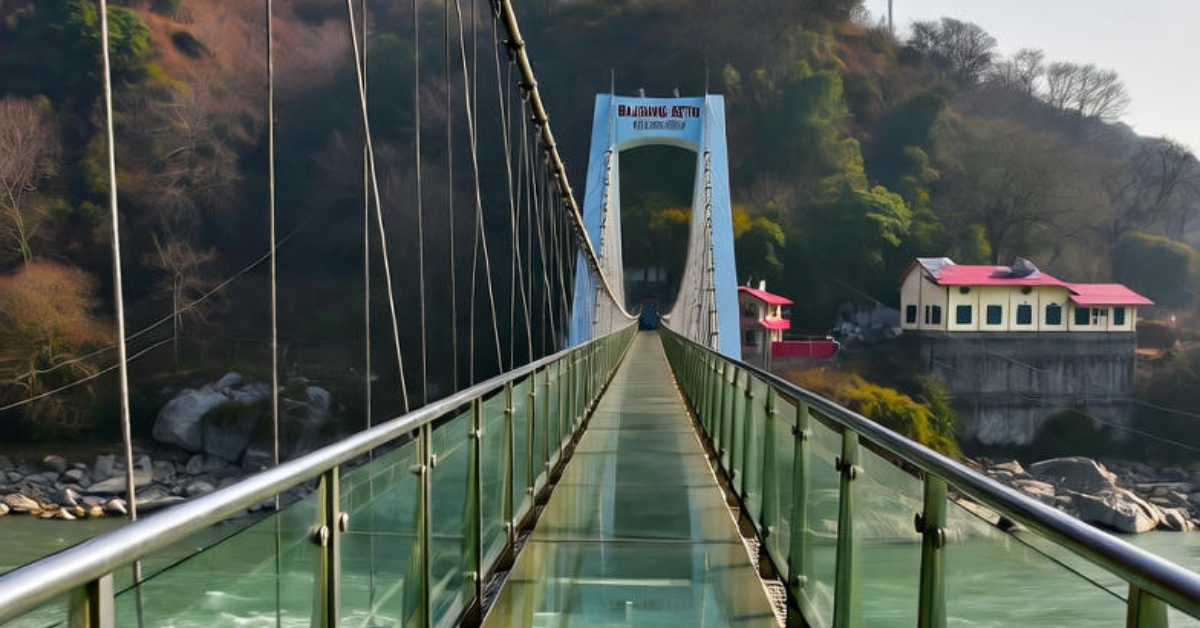
Rishikesh, the spiritual heart of Uttarakhand, has long been defined by its bridges — the famous Laxman and Ram Jhula and now Bajrang Setu, connecting faith, culture, and everyday life across the Ganga. Now, a new marvel joins this legacy: Bajrang Setu, a modern suspension bridge that beautifully blends tradition with cutting-edge engineering.
The Need for a New Bridge
For nearly a century, Laxman Jhula stood as a symbol of devotion and adventure, linking Tapovan and Jonk on either side of the river. However, after years of heavy use and structural wear, it was declared unsafe in 2019 and closed to the public. To maintain connectivity and ensure visitor safety, the Uttarakhand government decided to construct a new bridge — one that would honor the spirit of the old while meeting modern standards.
Thus began the journey of Bajrang Setu, a state-of-the-art bridge designed to serve as both a vital link and a tourist attraction.
Design and Structure
Spanning approximately 132 meters across the Ganga, Bajrang Setu is a remarkable example of modern architecture set against the Himalayan backdrop. The bridge is about 8 meters wide, with separate lanes for pedestrians and two-wheelers.
Its most striking feature is the transparent glass walkway on either side — each around 1.5 meters wide — giving visitors a thrilling view of the river flowing directly beneath their feet. These walkways are made from multi-layered, reinforced glass panels that combine safety with a sense of wonder.
The bridge’s design pays homage to Uttarakhand’s cultural roots. The pillars and entry points are inspired by the intricate stonework and divine motifs of temples like Kedarnath, symbolizing strength, spirituality, and balance. The use of steel cables and glass surfaces adds a modern, futuristic touch without disturbing the natural beauty around it.
Construction and Investment
Built at an estimated cost of ₹60–70 crore, Bajrang Setu has been one of the state’s most ambitious infrastructure projects. Construction began in 2022, and after years of planning, testing, and precise engineering, the bridge is expected to be fully opened to the public by late 2025 or early 2026.
The project was executed under the supervision of the Uttarakhand Public Works Department (PWD), with a focus on durability, earthquake resistance, and minimal environmental impact. Advanced materials and design techniques ensure the bridge can withstand both natural elements and high tourist footfall.
Cultural and Touristic Importance
Bajrang Setu is not just a bridge; it’s a statement — a seamless blend of faith, technology, and sustainability. For locals, it restores a crucial route across the river. For tourists, it offers a new perspective of Rishikesh — quite literally.
Standing on the glass walkway, one can see the emerald waters of the Ganga glistening below and the Himalayan foothills stretching endlessly beyond. It’s expected to become one of the most photographed spots in the region, attracting pilgrims, photographers, and thrill-seekers alike.
The bridge also strengthens Rishikesh’s identity as both a spiritual retreat and an adventure destination. Its proximity to ashrams, yoga centers, cafes, and river-rafting points makes it an essential stop for anyone exploring the area.
Visiting Tips
- Best Time: Early morning and evening offer the best light and views for photography.
- Footwear: Comfortable, non-slip shoes are recommended for walking on glass panels.
- Respect Rules: Follow pedestrian zones and safety guidelines — especially during peak hours.
- Combine Visits: You can easily include Ram Jhula, Parmarth Niketan Ashram, and Triveni Ghat in the same itinerary.
A Bridge Between Eras
Bajrang Setu represents more than just an architectural upgrade — it’s a bridge between the past and the future. It honors the legend of Laxman’s crossing while embracing the technological strides of modern India. As it opens to the world, it stands as a reminder that even in a rapidly changing world, faith and innovation can coexist beautifully on the banks of the Ganga.