
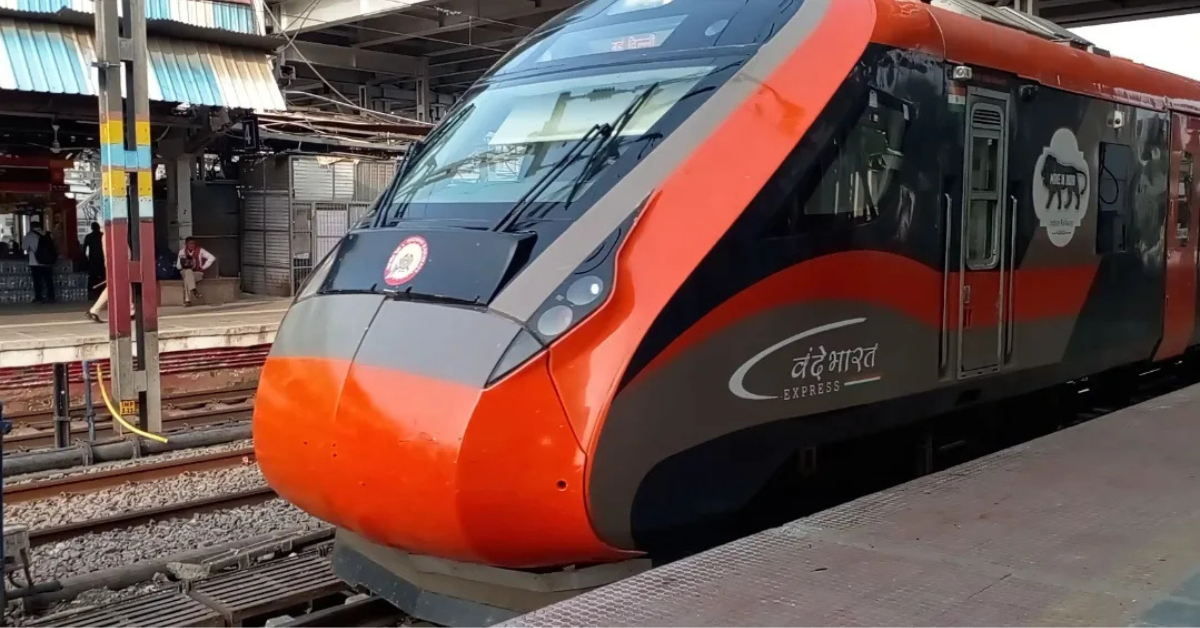
In a significant leap toward transforming India’s rail infrastructure, India and Russia have joined forces to co-develop and manufacture the next generation of Vande Bharat trains—Vande Bharat 2.0. This collaboration marks a defining moment in both technological cooperation and industrial partnership between the two nations.
The Vision Behind the Partnership
India’s rail network is one of the largest and busiest in the world, carrying over 20 million passengers daily. With growing demand for faster, safer, and more comfortable travel, the government has placed high-speed and semi-high-speed rail modernization at the top of its agenda. The Vande Bharat Express, first launched in 2019, became a symbol of India’s engineering prowess. However, the next step—Vande Bharat 2.0, designed for long-distance overnight journeys—demands even more advanced technology and manufacturing capacity.
Recognizing this, India has partnered with Russia, a country known for its expertise in heavy rail and rolling stock manufacturing. The alliance combines India’s “Make in India” industrial ecosystem with Russia’s proven rail technology, ensuring both innovation and self-reliance.
Details of the Indo-Russian Agreement
The project is spearheaded by Rail Vikas Nigam Limited (RVNL) from India and Transmashholding (TMH) from Russia, under a new joint venture named Kinet Railway Solutions Ltd.
Key highlights of the agreement include:
- Scale of production: Manufacturing up to 1,920 Vande Bharat sleeper coaches in the initial phase.
- Project value: Estimated at around USD 6.5 billion.
- Location: A state-of-the-art facility in Latur, Maharashtra, which will serve as a major manufacturing and maintenance hub.
- Maintenance plan: The joint venture includes a 35-year maintenance commitment, ensuring top-quality performance and service life.
- Technology transfer: Russia will provide advanced rail technology and design expertise, while India will focus on large-scale local manufacturing, skill development, and supply chain integration.
Features of Vande Bharat 2.0
The new version, popularly called Vande Bharat Sleeper, represents a major upgrade over existing chair-car models.
- Sleeper configuration: The trains will have comfortable sleeping berths designed for long-distance, overnight routes, expanding the reach of the premium Vande Bharat brand.
- Enhanced passenger experience: Features will include improved interiors, noise reduction, energy-efficient air conditioning, and advanced safety systems.
- Higher speed and reliability: The trains are expected to reach speeds up to 200 km/h, reducing travel times on key intercity routes.
- Sustainability focus: The new generation emphasizes energy efficiency and lower maintenance costs, aligning with India’s green mobility goals.
Economic and Industrial Impact
The collaboration is not just about building trains—it’s about building an entire ecosystem of advanced manufacturing.
- Job creation: The Latur facility alone is expected to generate over 10,000 direct and indirect jobs, stimulating regional economic growth.
- Boost to local industry: Small and medium suppliers in India will benefit from the large demand for components, materials, and services.
- Technology upgrade: The transfer of Russian expertise will raise the standard of domestic rolling stock manufacturing, making India a potential exporter in the near future.
- Strengthening India-Russia ties: Beyond defense and energy cooperation, this project expands the partnership into high-tech infrastructure, creating a new axis of industrial synergy.
Challenges on the Horizon
Like any large-scale industrial venture, the Vande Bharat 2.0 project faces hurdles.
- Design modifications: Adjustments to coach interiors, pantry layout, and comfort features may affect delivery timelines.
- Supply chain risks: With Russia facing international sanctions, ensuring smooth technology and material flow will require careful management.
- Scale and cost control: Producing nearly two thousand coaches while maintaining quality and cost efficiency will test both partners’ capabilities.
Despite these challenges, the project is progressing steadily, with design finalization and initial production lines already under development.
What This Means for Indian Railways
For passengers, Vande Bharat 2.0 promises faster, cleaner, and more comfortable long-distance travel, blending luxury with affordability. For Indian Railways, it represents a major step toward modernization—reducing reliance on imported technology while developing domestic capabilities for the future.On a larger scale, this initiative aligns with the Atmanirbhar Bharat (Self-Reliant India) vision, encouraging technology co-creation rather than mere adoption. If executed successfully, the Indo-Russian Vande Bharat 2.0 could become a blueprint for future international collaborations in India’s transport and manufacturing sectors.
The Road Ahead
The first Vande Bharat sleeper prototypes are expected to roll out by 2026, marking the beginning of a new era in Indian rail travel. As production ramps up, the trains will serve major routes across the country, offering passengers a world-class travel experience.
Ultimately, the India-Russia partnership for Vande Bharat 2.0 is not just a railway project—it is a testament to shared innovation, mutual trust, and a commitment to redefining modern transport for the future.