
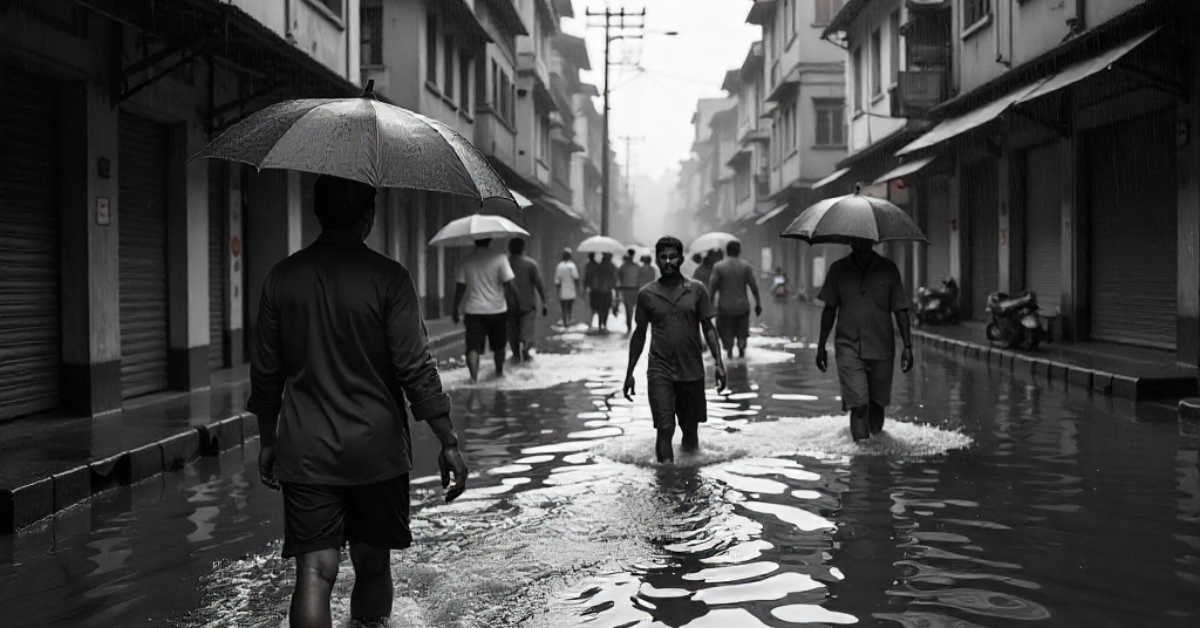
For the past five days, Kolkata has been battered by torrential rains that have left large swathes of the city submerged. Just as the countdown to Durga Puja—the city’s most cherished festival—was in full swing, the skies opened up with relentless downpours, halting daily life, dampening the festive fervor and leaving Kolkata flooded. From flight cancellations at the airport to pandals under water, the last week has been a severe reminder of how vulnerable the city is to extreme weather events.
The Deluge in Numbers
Between September 23 and 24 alone, Kolkata received over 250 mm of rainfall in a single day—the highest in nearly 40 years. For perspective, this was more than half of the city’s average monthly rainfall compressed into 24 hours. Such intensity was enough to overwhelm drainage systems, leaving roads waterlogged for hours and, in some areas, days.
Neighborhoods like Behala, Jodhpur Park, Park Circus, Topsia, and Kankurgachi were inundated, with water levels reaching knee to waist height. Emergency services had to rescue stranded commuters, and power cuts were enforced in several areas to prevent electrocution.
Why Such Heavy Rain?
The recent deluge can be attributed to multiple factors working in tandem:
- Low-Pressure System over the Bay of Bengal
A deep low-pressure trough formed over the Bay and moved inland, pumping moisture-laden winds into south Bengal. The system stalled over Kolkata, causing continuous downpours. - Delayed Monsoon Withdrawal
Normally, the monsoon starts retreating by late September. This year, however, the withdrawal has been delayed, meaning active monsoon currents are still strong. - Urban Flooding Vulnerability
Kolkata sits on a low-lying delta with limited natural drainage. Rapid urbanization has shrunk wetlands and blocked canals that once absorbed excess rainwater. - Outdated Drainage Infrastructure
Much of the city’s drainage network dates back to colonial times. Clogged with silt, plastic waste, and debris, the system collapses under the strain of high-intensity rainfall. - Climate Change Effect
Meteorologists point out that short, extreme bursts of rainfall are becoming more frequent due to global warming. These events are harder to predict and manage, catching cities off-guard.
Flight Delays and Cancellations
The downpour didn’t just paralyze the streets—it also brought air travel to a standstill. The Netaji Subhas Chandra Bose International Airport faced severe waterlogging on runways and connecting roads, forcing airlines to cancel or delay dozens of flights.
Passengers reported being stranded for hours, with departures pushed back indefinitely due to safety concerns. Many incoming flights had to be diverted to nearby cities until conditions improved. The disruption rippled beyond Bengal, affecting travelers with connections across India and abroad.
For those hoping to visit Kolkata during the Puja season—a time when the city usually sees a surge of tourists—the flight chaos was a major setback.
Impact on Daily Life
Roads and Transport
Traffic snarls stretched for kilometers as vehicles broke down in flooded underpasses. Buses were forced to change routes, and Metro services slowed due to water seeping into tunnels and power substations. Commuters either waded through knee-deep water or remained stuck indoors.
Homes and Health
Floodwaters entered ground-floor homes in low-lying localities, damaging belongings and food stocks. The stagnant pools have also raised health concerns, with doctors warning of a spike in dengue, malaria, and waterborne infections.
Businesses and Markets
Puja shopping is a massive economic driver, but this year many popular markets like Gariahat, Hatibagan, and New Market were waterlogged. Traders reported losses as goods got soaked and footfall declined sharply. Street vendors, who depend heavily on last-minute buyers, have been hit the hardest.
Durga Puja Preparations in Jeopardy
The timing of the downpour could not have been worse. With less than a week to go for Durga Puja, many pandals—some costing crores—have been damaged by the rains.
- Pandals Under Water: Bamboo scaffolding and cloth decorations collapsed in several areas, forcing organizers to carry out emergency repairs.
- Electrical Hazards: Festive lighting arrangements were short-circuited by rainwater, posing risks to both organizers and visitors.
- Inaugurations Postponed: Some Puja committees delayed inaugurations, breaking with tradition, as pandals were simply not ready.
- Artisans and Workers Affected: Idol makers, decorators, and electricians—who depend on Puja for their annual earnings—are facing losses and working overtime to salvage what they can.
Despite the damage, the spirit of the festival remains strong. Volunteers are draining water around pandals, repairing lights, and ensuring safety measures are in place before the crowds arrive.
A City Tested, A Spirit Unbroken
Kolkata has faced many such deluges in the past, but the past week’s rains highlight the urgent need for better preparedness. Upgrading drainage systems, preserving wetlands, and enforcing stricter building codes are vital if the city is to withstand future cloudbursts.
For now, the city is doing what it does best—showing resilience. Families are still preparing for the Puja with enthusiasm, pandal organizers are working round the clock to meet deadlines, and Kolkatans are finding ways to celebrate even amid flooded streets.
The rains may have slowed the city down, but they haven’t washed away its festive spirit. As Durga Puja approaches, Kolkata once again proves that while nature can challenge its resilience, it cannot drown its soul.