
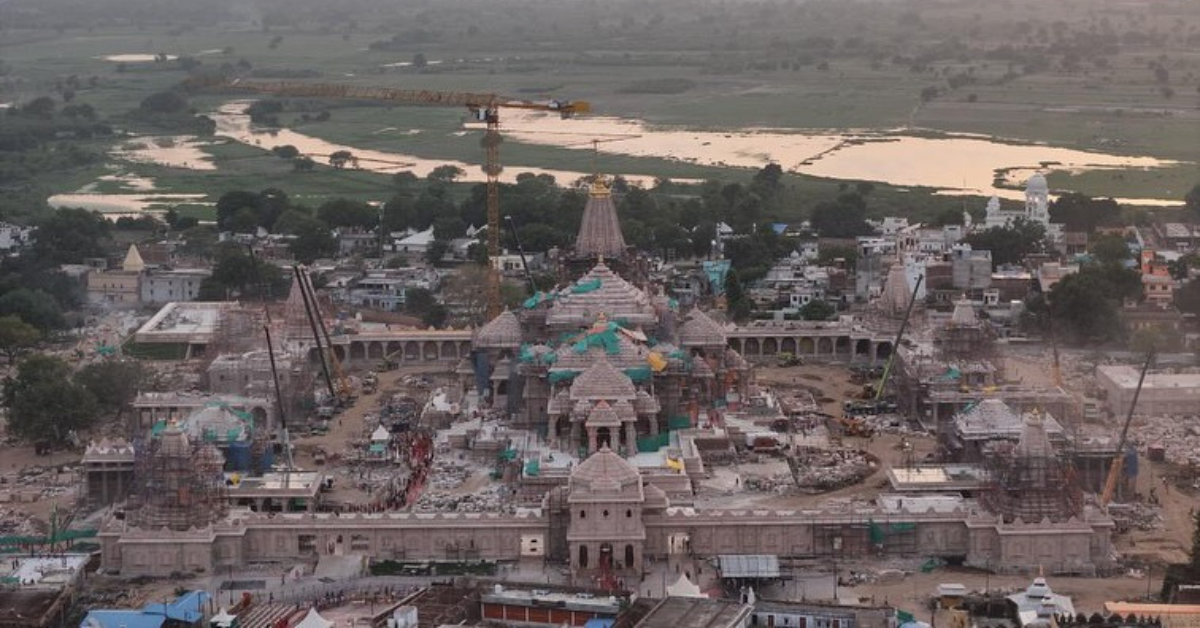
The long-awaited moment is finally here. The grand Ram Mandir in Ayodhya — a symbol of faith, perseverance, and unity — is set to be fully opened to devotees on November 25, 2025. The completion of this monumental temple marks the culmination of decades of devotion and a new chapter in India’s spiritual and cultural journey.
From Faith to Reality: The Journey So Far
The story of the Ram Mandir spans generations. The site, believed to be the birthplace of Lord Ram, has long been at the heart of India’s spiritual consciousness. After years of legal and social debates, the Supreme Court’s 2019 verdict finally paved the way for temple construction. Following the ruling, the Shri Ram Janmabhoomi Teerth Kshetra Trust was established to oversee the temple’s design, construction, and management.
The temple’s consecration ceremony (Pran Pratishtha) took place on January 22, 2024, led by Prime Minister Narendra Modi. This sacred event officially marked the installation of the idol of Balak Ram, representing Lord Ram in his childhood form. Since then, the temple has been partially open to visitors, while final construction continued at a rapid pace.
Now, after nearly two years of tireless work, the trust has confirmed that the entire temple complex will be open for public darshan from November 25, 2025. The day will also feature a grand flag-hoisting (Dhwaj Arohan) ceremony, symbolizing the temple’s completion.
The Architectural Marvel of Ayodhya
The Ram Mandir stands as a breathtaking example of traditional Nagara-style temple architecture. The structure, built using carved pink sandstone from Rajasthan, combines ancient techniques with modern precision — notably avoiding the use of steel or concrete in key spiritual areas.
The temple rises to about 161 feet in height, stretching 360 feet in length and 235 feet in width. Its grandeur is enhanced by three levels, each designed for specific rituals and ceremonies.
Inside, devotees will witness intricately carved pillars, massive domes, and halls such as the Sabha Mandap, Kirtan Mandap, Prarthana Mandap, and Nritya Mandap. The sanctum sanctorum (Garbhagriha) houses the idol of Lord Ram, bathed in natural light that filters through a golden dome.
The larger temple complex spans over 70 acres and includes 14 smaller shrines, expansive gardens, and a Parikrama Path for circumambulation. The landscaping draws inspiration from ancient forests described in the Ramayana, featuring sacred plants like tulsi, peepal, and banyan.
By November, additional facilities such as the museum, auditorium, and pilgrim rest areas are expected to be operational, creating a holistic spiritual experience for visitors.
A Symbol Beyond Religion
The completion of the Ram Mandir represents more than just the end of a construction project — it is a moment deeply woven into India’s cultural identity.
For millions of devotees, it is the fulfillment of a centuries-old dream — the tangible realization of faith passed down through generations. For the nation, it stands as a symbol of unity, resilience, and shared heritage.
Leaders and religious figures across India have emphasized that the temple is not only a sacred space for Hindus but also a cultural landmark that celebrates India’s diversity and architectural legacy.
The government of Uttar Pradesh has also developed extensive infrastructure around Ayodhya, including new roads, rail links, hotels, and an international airport. The aim is to make Ayodhya a major global center for spiritual and cultural tourism, expecting to welcome over 50 million visitors annually after the temple’s full opening.
Challenges and Preparations
As the opening day nears, the temple authorities are focused on completing the remaining works, including the auditorium and outer boundary structures. Crowd management, security, and pilgrim facilities are being strengthened to accommodate the expected influx of visitors.
The Ayodhya Development Authority has also been working on sustainable solutions — from solar power generation to waste management — to ensure that the temple city remains clean, green, and accessible.
What to Expect on November 25
The flag-hoisting ceremony on November 25 is expected to be a grand national event. Prime Minister Modi and senior religious leaders will participate, with Vedic chants, cultural performances, and nationwide broadcasts marking the occasion. For devotees, it will be the first time the entire temple and its surrounding complex are open for darshan.
From that day onward, Ayodhya will officially step into a new era — one where faith meets architecture, and tradition meets transformation.
The Ram Mandir’s full opening on November 25, 2025, will be remembered as one of the most significant spiritual moments in modern India. It embodies centuries of devotion, decades of determination, and years of craftsmanship. As its golden flag rises high above Ayodhya’s skyline, it will not just mark the completion of a temple — it will symbolize the spirit of a nation that continues to find unity and inspiration in its timeless traditions.